Read sources by what they establish
The original GUMSHOE page describes the project directly. Gumdrop documents its material collaboration. The Virtual Shoe Museum preserves product imagery and a concise project record. A museum-hosted presentation adds the campaign sequence and design credits.
Other publications show how the idea travelled. Their headlines sometimes simplify the material story; the supplier and product-component description remain the better starting points for a technical claim.
Source reading list
- GUMSHOE original website, 27 July 2018
- Gumdrop: the GUMSHOE collaboration
- Gumdrop: GUM-TEC® material
- GUMSHOE project presentation, 20 slides
- London Metropolitan University, 22 March 2018
- Virtual Shoe Museum: GUMSHOE
- Fjord Trends 2019, pages 24–25
- Gumdrop product and collection brochure
- Trashmagination episode 60: chewing gum, October 2018
Four recovered PDFs, four different roles
| Document | Useful content |
|---|---|
| GUMSHOE presentation · 20 slides | Designers, collaboration, colourways, campaign sequence and original visuals |
| Gumdrop brochure | The supplier’s gum-collection loop and material applications |
| Fjord Trends 2019 · 53 pages | GUMSHOE’s place in a wider discussion of circular design, pp. 24–25 |
| Trashmagination episode 60 · October 2018 | Gum and wrapper reuse, with GUMSHOE as one footwear example |
A precise account matters
A press mention is evidence that a publication discussed the project. It does not certify current stock, prove a limited edition or verify an environmental saving per pair. Numerical publicity claims shown in the old presentation are retained as statements from that presentation.
For product photography, brand enquiries or a correction, contact info@gumshoe.amsterdam. Tell us which page or image your enquiry concerns.
Additional records recovered
A magazine cover, not a new product edition
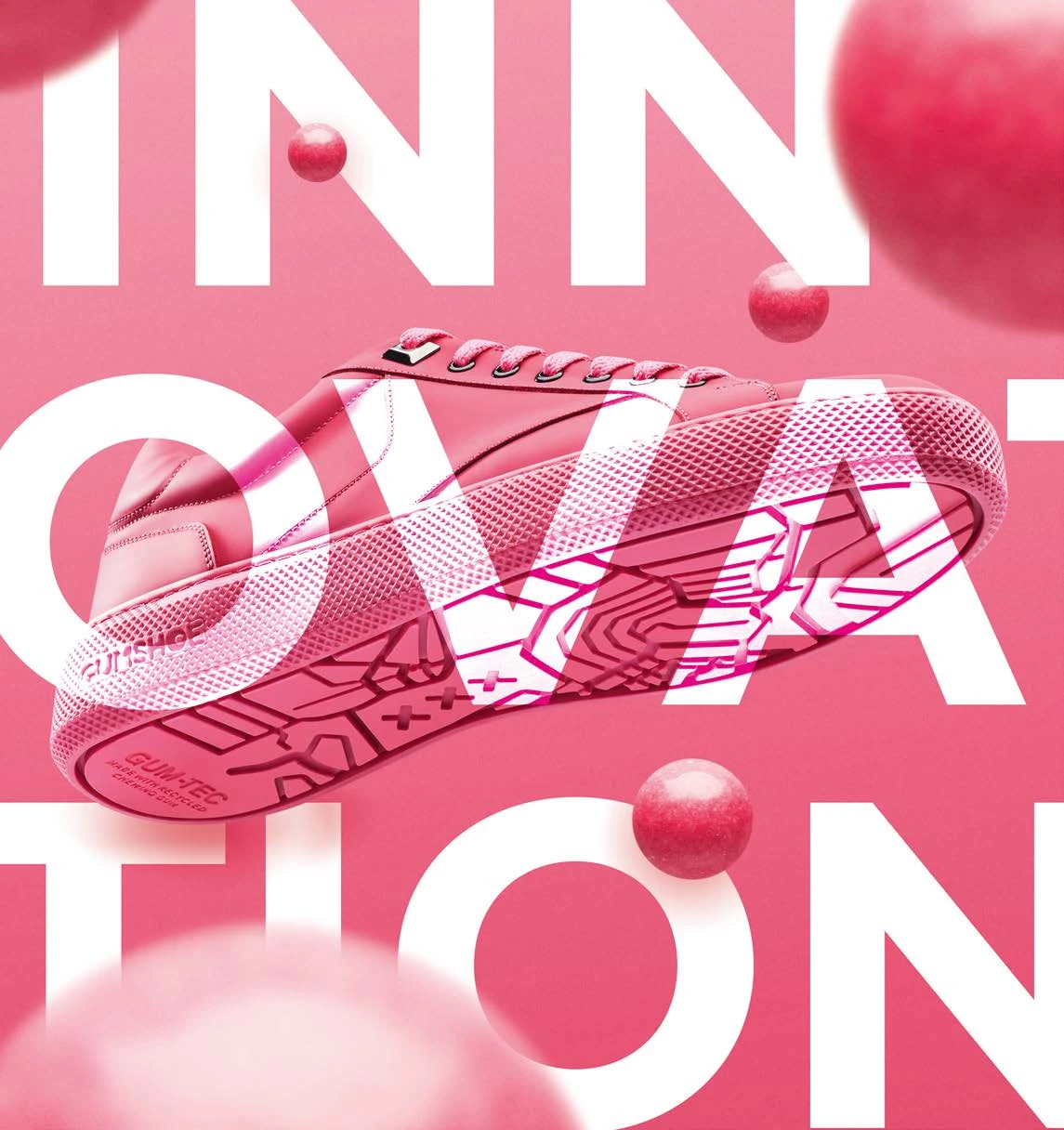
The complete November 2018 issue includes GUMSHOE on its cover and in its final feature. This establishes another publication placement, not a separate sneaker edition. The reproduced artwork is credited to Publicis One. Keep publication title, issue and image credit together when using it in a presentation.
Explore the Yksi exhibition records alongside the campaign-film reading guide for two different ways to explain the same project.
The ASSIST record: follow the story back to its source
The complete April–June 2019 issue of iMPACT, published by ASSIST, includes GUMSHOE on printed page 12, PDF page 14. The item credits Lonely Planet. The publisher now provides the 64-page issue through its own magazine site; the upload folder says 2023, but the publication date remains 2019.
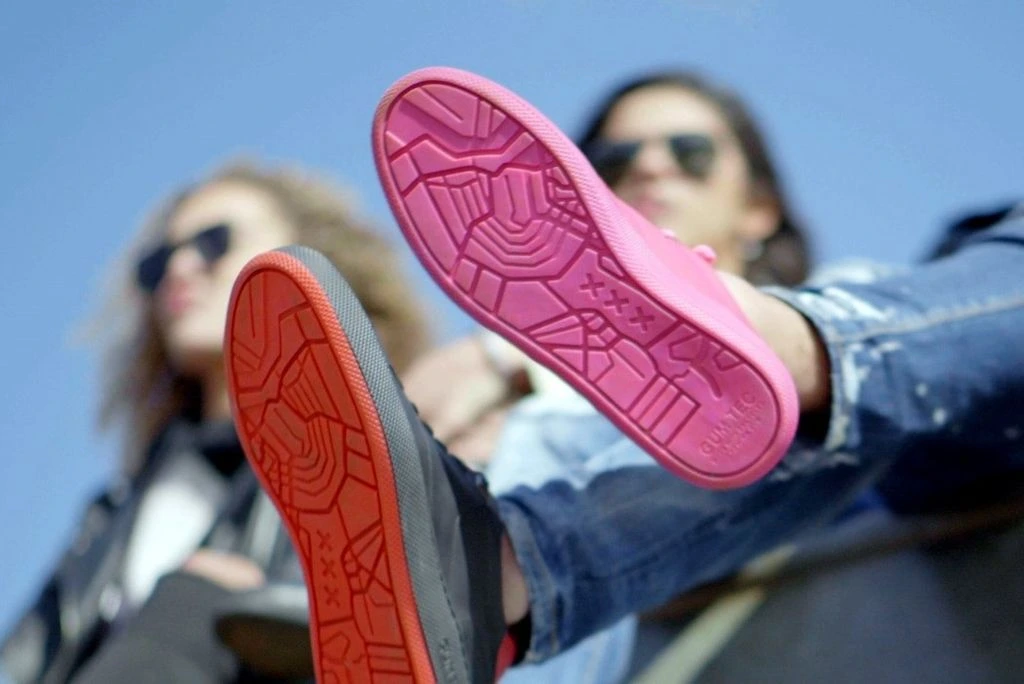
The piece links Iamsterdam, Gumdrop and Explicit Wear, describes gum-derived outsole material and the Amsterdam map motif, and reports the two colourways. Its reported price belongs to that publication period, not to a current offer. Its percentage wording is not a specification for the entire finished shoe. The nearby James Dyson award reference belongs to a separate kitchenware item, not to GUMSHOE.
Use the document without losing its context
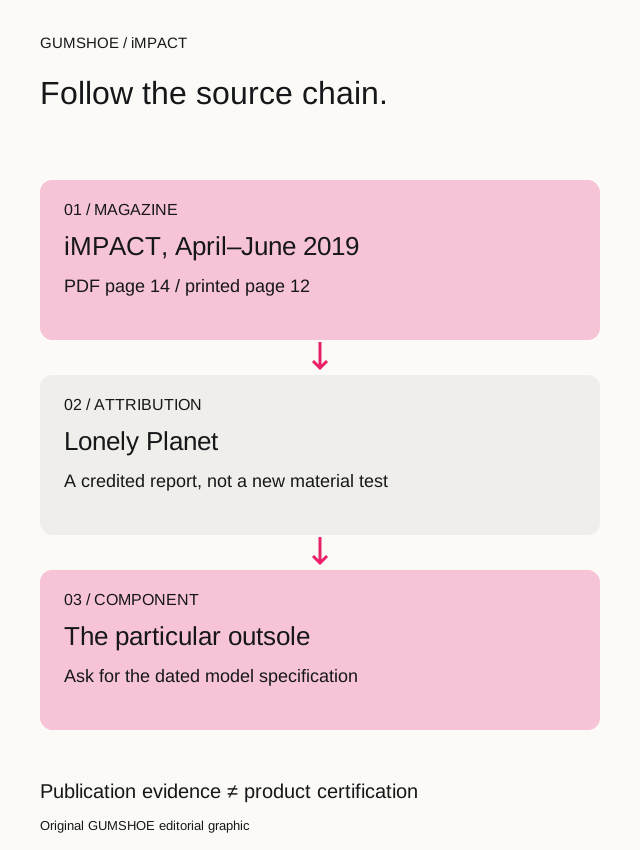
- Write the issue date and both page numbers before quoting or linking.
- Record the attribution inside the item. A republished report is not a second independent material test.
- Separate the pictured component, a stated material claim and any present sales information.
- Attach the actual model specification for a technical conclusion. If it is unavailable, record the question instead.
A complete source-note example
Document: iMPACT, April–June 2019; PDF page 14, printed page 12. Subject: GUMSHOE outsole design. Attribution in item: Lonely Planet. Image observation: coloured outsoles with a street-map pattern. What the document establishes: the project was described in this issue. Open question: which dated component specification supports the percentage for the particular pair? Next action: request that specification before repeating a numerical composition claim.
Keep this note with the saved page reference, not just a screenshot of its headline. A reader can then distinguish the magazine record from the product evidence. For the component worksheet, continue to reading recycled-content claims.
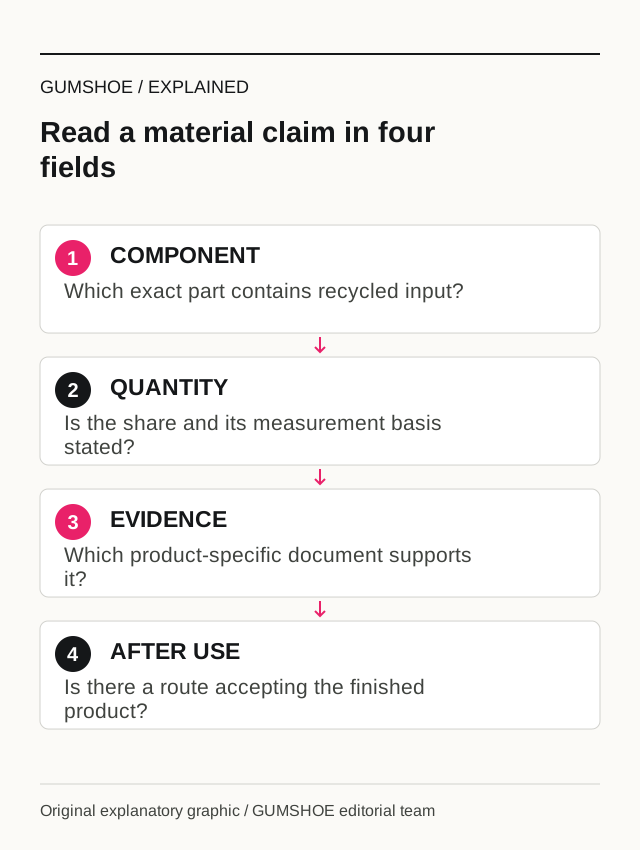
- COMPONENT: Which exact part contains recycled input?
- QUANTITY: Is the share and its measurement basis stated?
- EVIDENCE: Which product-specific document supports it?
- AFTER USE: Is there a route accepting the finished product?
Sources & image credits
Original GUMSHOE photography and project images are used with the owner’s permission. New diagrams are original explanatory work.
- GUMSHOE original website, 27 July 2018
- Gumdrop: the GUMSHOE collaboration
- GUMSHOE project presentation, 20 slides
- Fjord Trends 2019, pages 24–25
- Gumdrop product and collection brochure
- Trashmagination episode 60: chewing gum, October 2018
- Virtual Shoe Museum: GUMSHOE
- GUMSHOE campaign credits, April 2018
- SAN campaign record, 2018
- WWD at White Milano, 20 June 2019, pp. 2–3
- Cannes Lions 2019 Brand Experience & Activation shortlist
- RetailTrends interview, 1 May 2019
- Mediamatic: Let’s Gum Together
- Oiltanking Connections, Vol.30/2/2018, cover and p.40
- iMPACT / ASSIST: April–June 2019, printed p.12 (PDF p.14)