The object carries the message
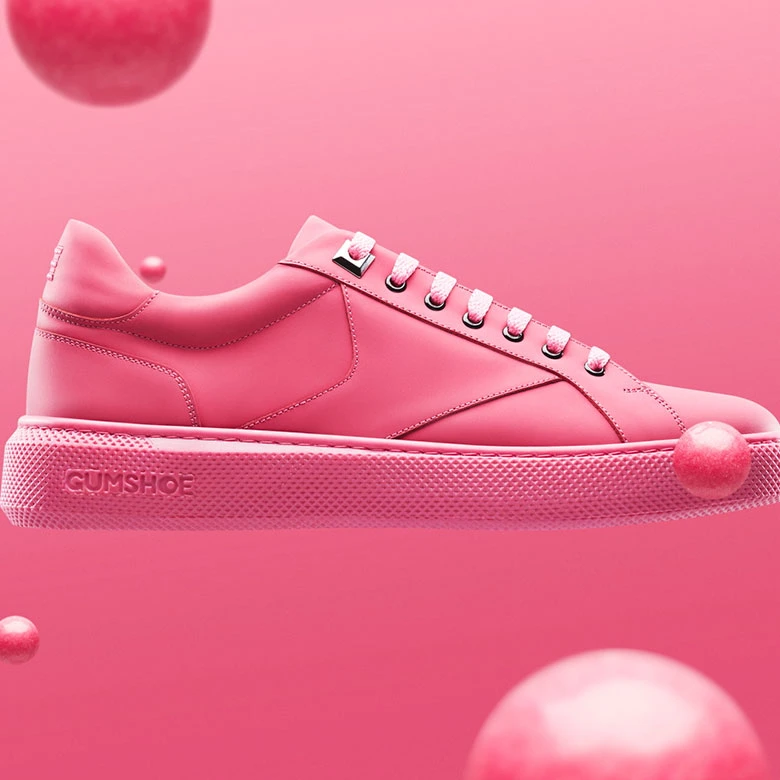
A pink sneaker against a pink background is immediately recognisable. The map-shaped underside connects that object to Amsterdam, while the chewing-gum story supplies a reason to look again. Tackle Problems’ own portfolio states that it created a case video with Publicis. Treat that as a production record; it does not make every edit, publication or still image the same work.
The April 2018 campaign credits separately identify footwear design, material technology, photography and film roles. A shoe designer and a film maker solve different parts of the story. If you reuse an image for a presentation, keep its source and credit with it rather than attributing every visual to the shoe designers.
Read a campaign in four passes
- Notice: describe the visible problem or striking object without repeating a headline as a measured fact.
- Follow: identify the claimed transition from collected gum to a material and then to a shoe component. Note where the film skips a step.
- Inspect: distinguish the product views from diagrams, staged campaign artwork and explanatory captions.
- Act: identify the requested behaviour. A collection message is different from a purchase offer; neither is proof of material performance.
Pause at each change of subject and write one sentence. Record the timestamp if you watched the film yourself. This page does not supply invented timestamps or claim a new viewing test.
A worked reading of the campaign still
- Visible object
- Pink upper, pink sidewall, laces and embossed GUMSHOE lettering, surrounded by staged pink spheres.
- Design question
- How do colour, silhouette and lettering make the sneaker recognisable before the material story is explained?
- What to verify separately
- The model and date associated with the image, its material specification and any performance statement.
- Credit record
- Campaign visual found in the creator’s GUMSHOE portfolio. General photography credits identify Dave Fransen, but the portfolio does not assign an individual photographer to this exact file.
The spheres belong to the campaign composition. They are not evidence of the quantity of gum in the photographed shoe. For the individual design and production credits, use the people behind the campaign.
Build a clear one-minute explanation
For a classroom or design discussion, show one credited product view and use four short sentences: what object is shown; which component carries the material story; which source establishes that description; which question remains open. End with a relevant next step, such as reading the component specification or comparing the underside with the sole design guide. Do not add a sales count, new impact measurement or current product guarantee that your sources do not establish.
The product outside the studio
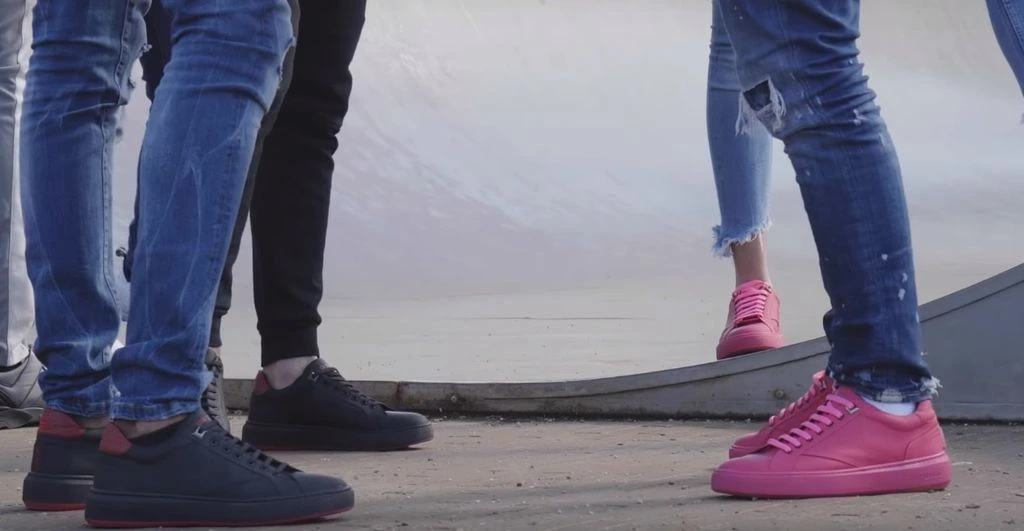
The street image changes the story from an isolated object to a shoe being worn. Compare the pink pair’s silhouette with the black pair, then note the setting and camera angle. A photograph can illustrate a style combination; it does not establish comfort over time, grip on wet ground or the experience of every wearer.
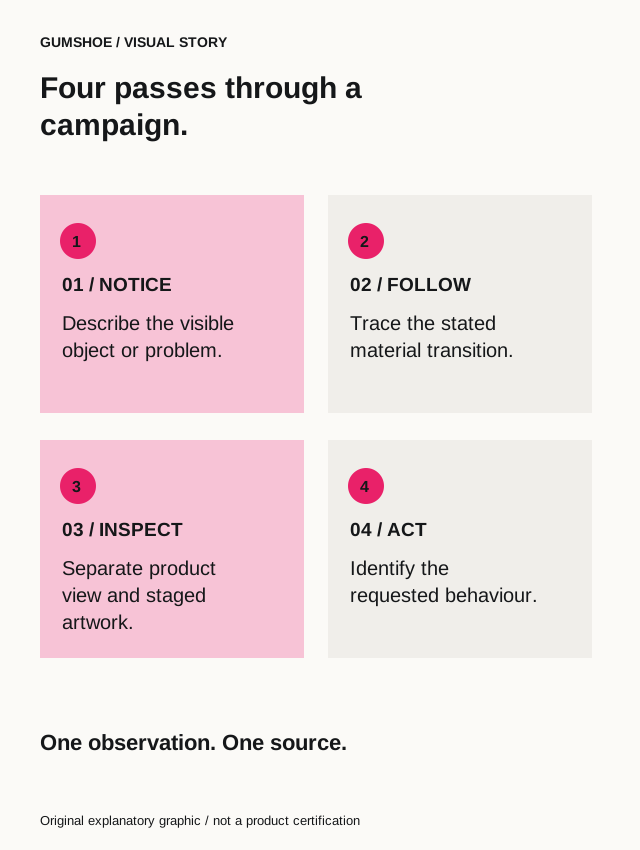
- 01 / NOTICE: Describe the visible object or problem.
- 02 / FOLLOW: Trace the stated material transition.
- 03 / INSPECT: Separate product view and staged artwork.
- 04 / ACT: Identify the requested behaviour.
Sources & image credits
Original GUMSHOE photography and project images are used with the owner’s permission. New diagrams are original explanatory work.