GUMSHOE
Origin

A city problem. A different kind of sneaker.

The GUMSHOE story: Amsterdam, recycled chewing gum, two colours and the people who connected them.

A city problem. A different kind of sneaker.
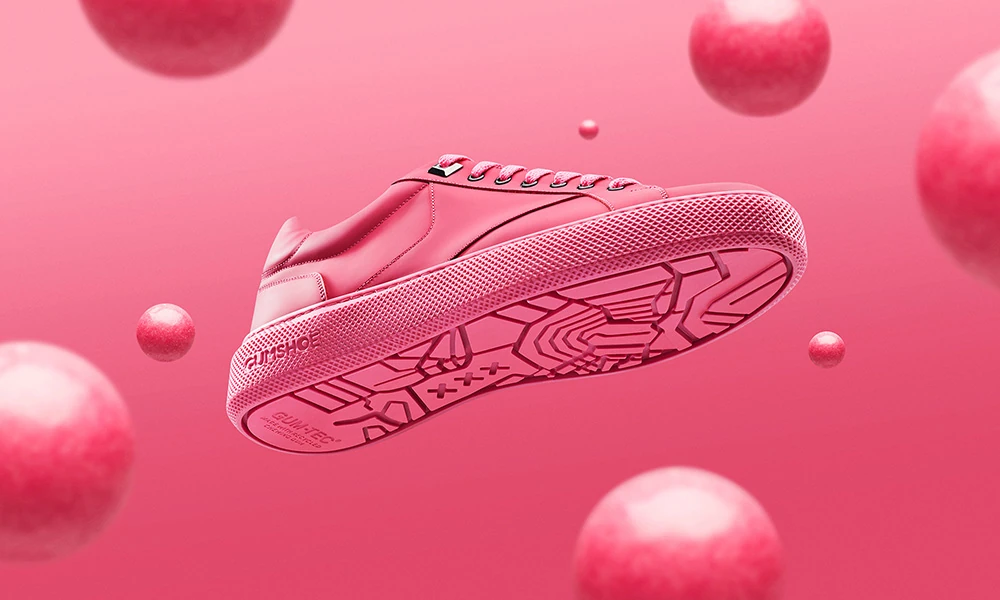
Original GUMSHOE project image · see the page sources and credits.

The idea under your feet

GUMSHOE began with an everyday city problem: chewing gum left on the pavement. In 2018, the Amsterdam Metropolitan Area, Explicit Wear and Gum-tec brought a different response into view. Used gum could become part of a shoe sole, and the shoe could make that material story visible.

The original website described soles made with recycled chewing gum collected from Amsterdam’s streets. Its campaign line linked footwear to cleaner streets. The pink and black designs gave people something concrete to look at: a low-top sneaker, a moulded outsole and a recognisable city reference.

A collaboration with different jobs

Gumdrop supplied the material expertise through Gum-tec. Explicit Wear brought shoe design. Amsterdam supplied the city context and the awareness campaign. These are the roles documented in the original project; they should not be read as a list of new commercial agreements.

The project presentation names designers Shaquille Gunther and Garezi Septara and shows Publicis One alongside Explicit and Gum-tec. Their contributions are part of the GUMSHOE design story.

What survived

The recovered website contains eight product views, three contributor portraits, the original wordmark and a process graphic. A 20-slide presentation preserved by a shoe museum adds the design thinking, campaign visuals and partner structure. The material supplier and Virtual Shoe Museum independently describe the product.

Together, these records let you distinguish what is visible, what is documented and what still needs a product-specific answer. Photography shows the design; it does not prove a particular pair’s size, current price or condition.

Read the shoe, then choose your pair

  1. Look at the side, heel and underside views in the collection.
  2. Read which part uses Gum-tec; do not treat the whole shoe as chewing gum.
  3. Measure both feet and ask for the actual fit information for your requested pair.
  4. Confirm size, condition, final price and delivery before accepting an order.

Follow the next chapter

Read the dated 2018 and 2019 descriptions to distinguish an announcement, a design ambition and a model-specific offer.

Explore the original details
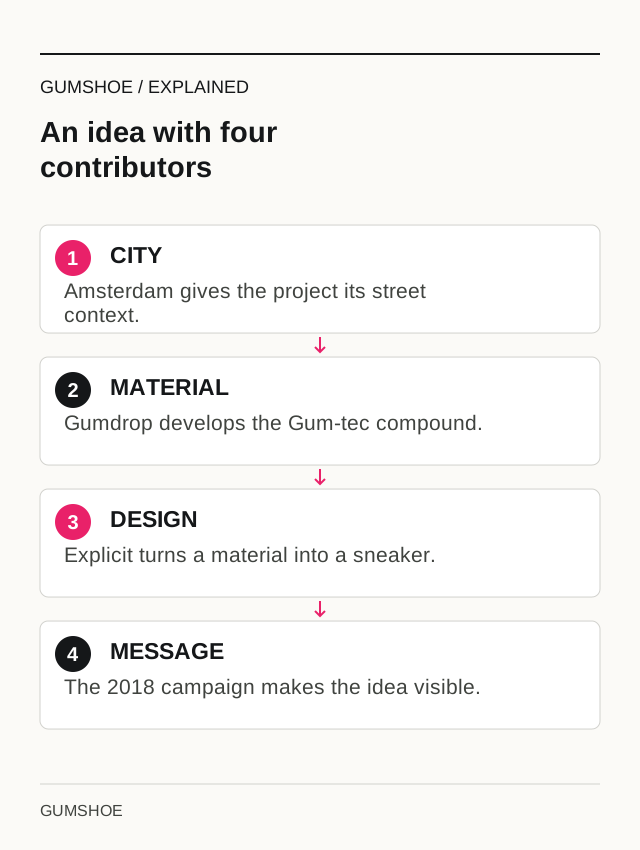
An idea with four contributors
  1. CITY: Amsterdam gives the project its street context.
  2. MATERIAL: Gumdrop develops the Gum-tec compound.
  3. DESIGN: Explicit turns a material into a sneaker.
  4. MESSAGE: The 2018 campaign makes the idea visible.
Based on the accompanying article and its cited sources; not a factory specification.

Sources & image credits

Original GUMSHOE photography and project images retain their source credits. New diagrams are original explanatory work.
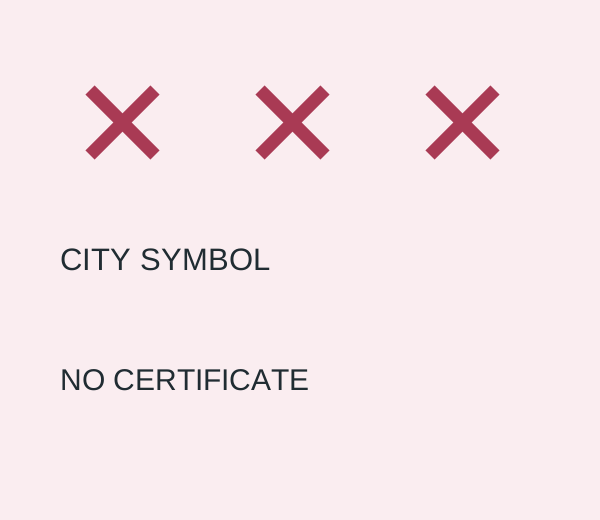
A city symbol is not a product certificate

Amsterdam’s three Saint Andrew’s crosses are recognisable civic symbols. Looking at their role in a shoe design is different from using them to infer a material percentage, a partnership or the specification of a pair. This visual-reading exercise makes that boundary useful when preparing an enquiry.

  1. Open an original GUMSHOE product view and identify which part you are looking at: side, heel or outsole. Record the image source and date rather than treating a campaign composition as a new product photograph.
  2. Describe only the marks you can see in that view. If a cross-shaped detail is hidden or unclear, leave it unresolved and ask for a closer view of the requested pair.
  3. Compare the civic reference with the City of Amsterdam’s account of the three Saint Andrew’s crosses. Do not reproduce the municipal logo as if it endorsed a current offer.
  4. Translate the observation into a product question: ask for the model-specific image or material record you need, then keep the answer with the written offer.
CITY SYMBOL · VISIBLE MARK · NO CERTIFICATE · ASK FOR PAIR
FieldExample or check
Civic referenceThe city describes three Saint Andrew’s crosses from its coat of arms as a recognisable Amsterdam symbol.
Visible design evidenceA sourced product photograph can show a mark’s shape and location when actually visible. It cannot establish the composition of hidden layers.
Unsupported inference to avoid“The city reference proves this pair was supplied under a current municipal partnership.” The symbol alone does not establish that.
Useful enquiryPlease send the relevant heel/outsole close-up for the requested model and confirm which specification applies to that pair. Include colour, size and condition in the same offer.
Observation recordImage/source/date __; view __; visible mark __; unresolved detail __; requested evidence __; matching offer __.

Original project photographs remain illustrations of the documented design. They do not constitute testing or inspection of a newly offered pair.

Download the record ↓

Sources: Gemeente Amsterdam — over het merk