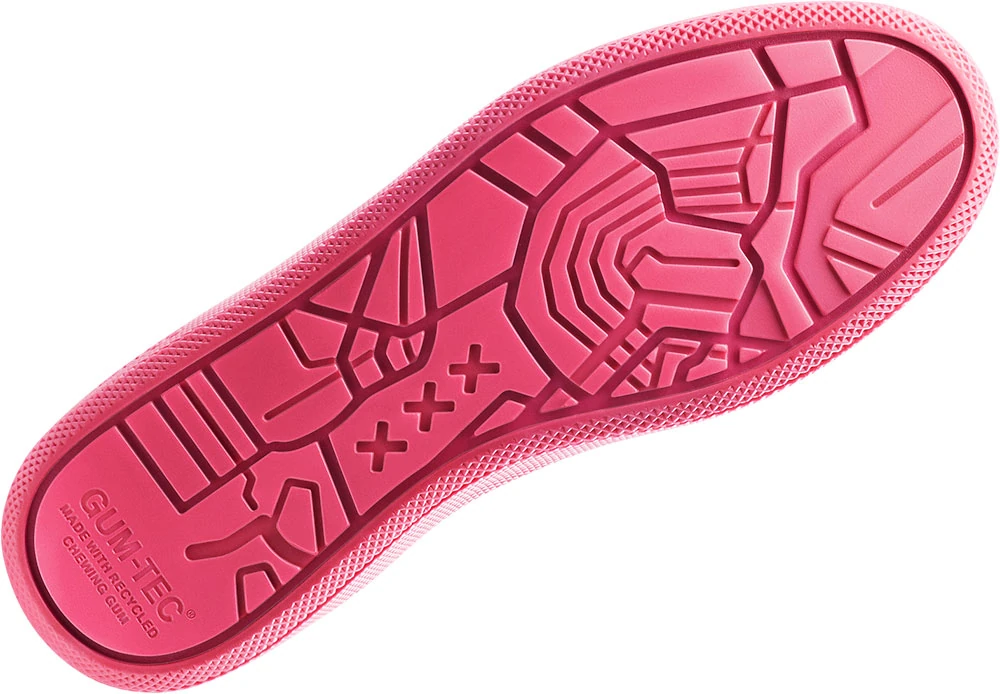
Turn the shoe over
Gumdrop’s project account identifies the moulded pattern as a map of Amsterdam’s streets. The underside photograph is the clearest place to see that reference. Lines and blocks give the city idea a physical surface rather than simply printing a city name on the upper.
This is a design interpretation, not a navigational map. Do not use the outsole to plan a walking route or infer that every small line identifies a particular street. The recovered records do not provide a labelled street-by-street key.
Look at the same idea in two colours
The pink design connects colour, gum and outsole. The black design combines a dark upper and sidewall with a contrasting coloured outsole and heel details. Both product series include underside views, so you can compare the graphic directly.
Three crosses, repeated with restraint
Three crosses are visible in the moulded outsole and at the heel in the product images. They work as an Amsterdam reference alongside the city map. These visible design features should not be mistaken for a certification mark.
An observation exercise
- Open the underside photograph at its original detail.
- Find the larger central pattern, then the three crosses.
- Compare it with the heel photograph and note how the motif moves between surfaces.
- Separate what you can see from performance claims: a detailed pattern alone does not prove a tested grip rating.
Three views, three things to inspect
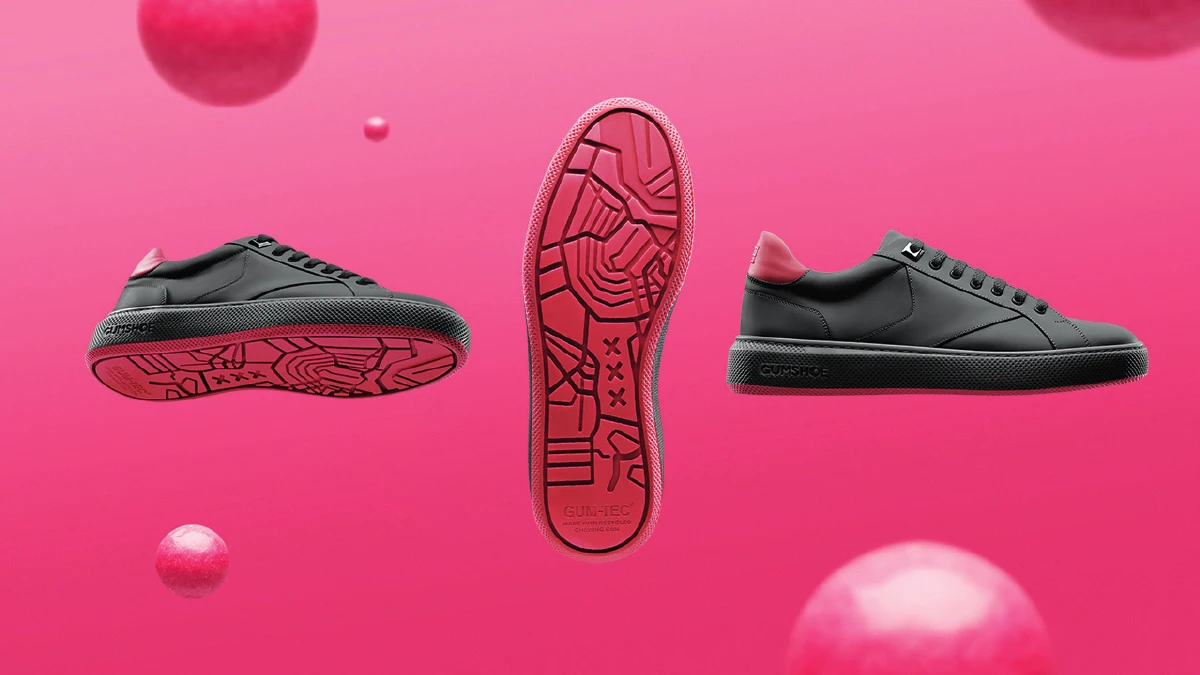
Begin with the bottom view: trace the raised and recessed lines, then locate the three crosses. Next compare the sidewall lettering with the side view. Keep the black upper and pink underside distinct when describing the colour. The drawing is a design reference; it does not let you measure grip, wear resistance or recycled content from the photograph.
An independent account of the map detail
Deutsche Welle’s four-page manuscript, distributed under a July 2018 filename, describes the Amsterdam map in the sole and separates the designer, city-marketing and creative-direction voices. It explains why the shoe could make street litter noticeable through an object people wanted to examine. That account supports the design context; the reported launch price and environmental numbers remain statements from that period, not current offers or new measurements.
A usable record for your pair
- Photograph: model, view and source date.
- Visible detail: map-like lines, three crosses, sidewall lettering or upper colour.
- Question: does the offered model match the image, and which component document applies?
- Boundary: do not infer traction, waterproofing, whole-shoe recyclability or a percentage from the motif.
Example: if a seller sends only a side photograph, request a bottom view to compare the pattern. A missing bottom image is a missing observation, not evidence of counterfeiting. Keep your conclusion limited to the views you actually have.
Separate appearance from composition
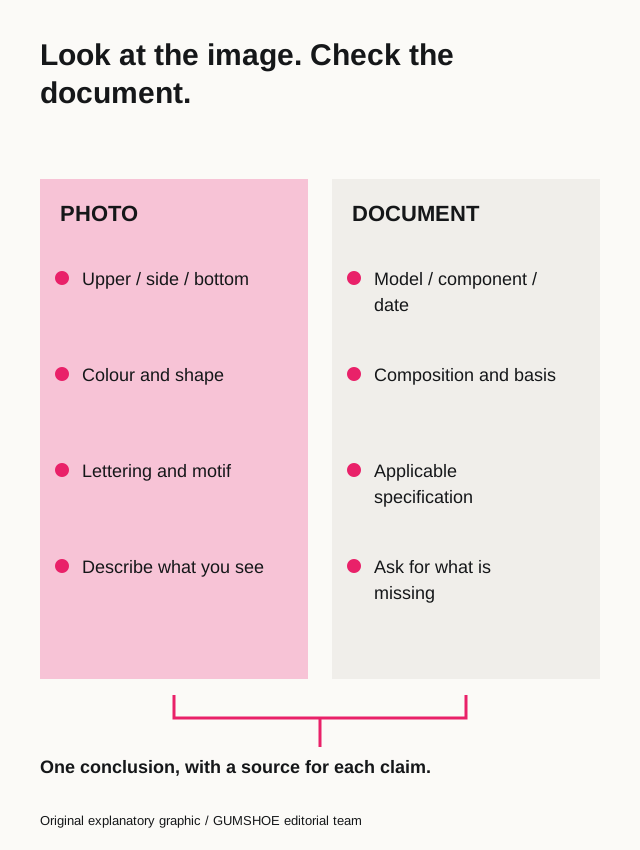
- View: photograph the upper, sidewall and bottom separately.
- Visible: record colour, lettering and the tread motif.
- Document: identify the component, composition basis and applicable model.
- Conclusion: state only what each source establishes.
The map as campaign artwork
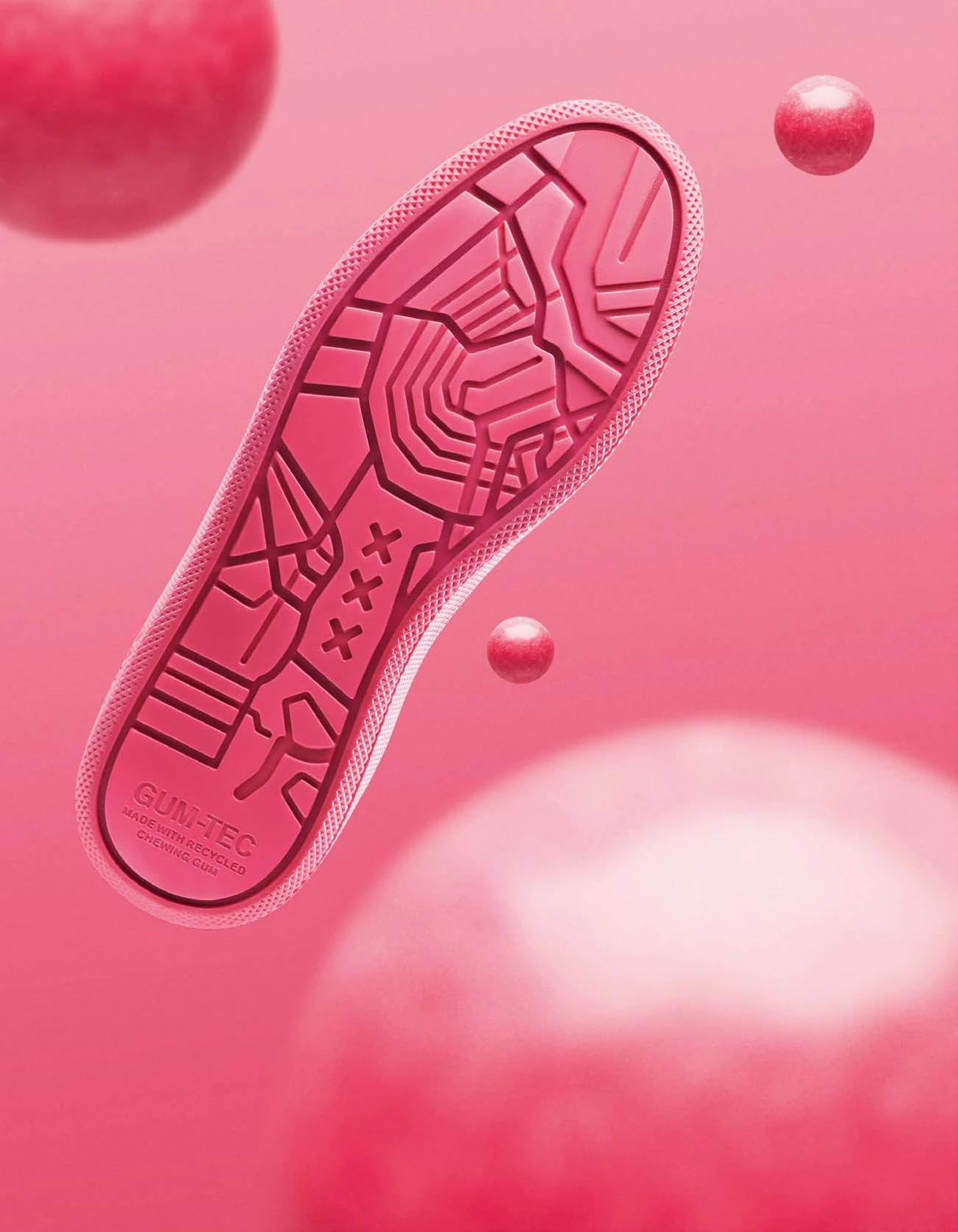
This recovered composition gives the underside a full view. Trace the map-like lines from heel to forefoot and distinguish them from the textured rim. The three crosses are part of the Amsterdam reference. The pink spheres are staged campaign elements, not a component diagram or a measurement of recycled content.
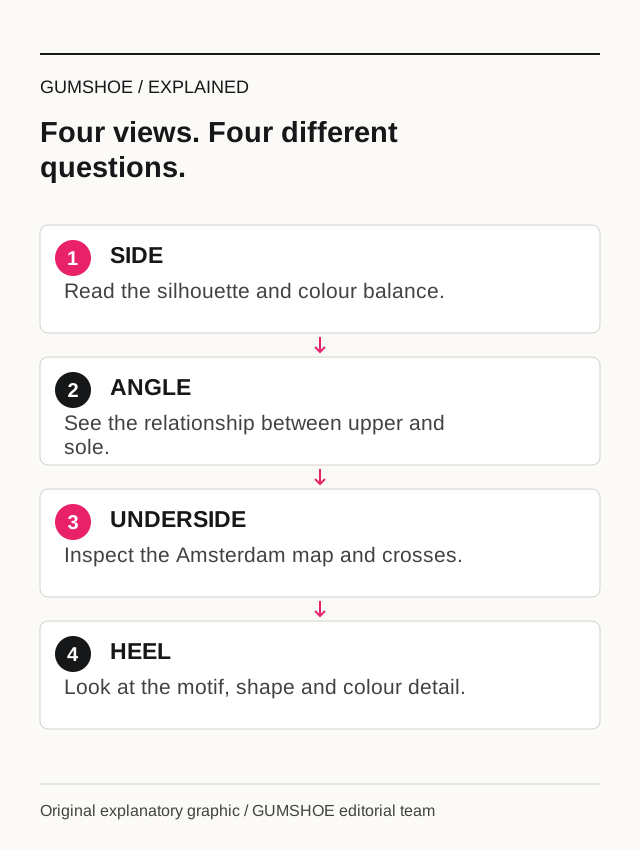
- SIDE: Read the silhouette and colour balance.
- ANGLE: See the relationship between upper and sole.
- UNDERSIDE: Inspect the Amsterdam map and crosses.
- HEEL: Look at the motif, shape and colour detail.
Sources & image credits
Original GUMSHOE photography and project images are used with the owner’s permission. New diagrams are original explanatory work.