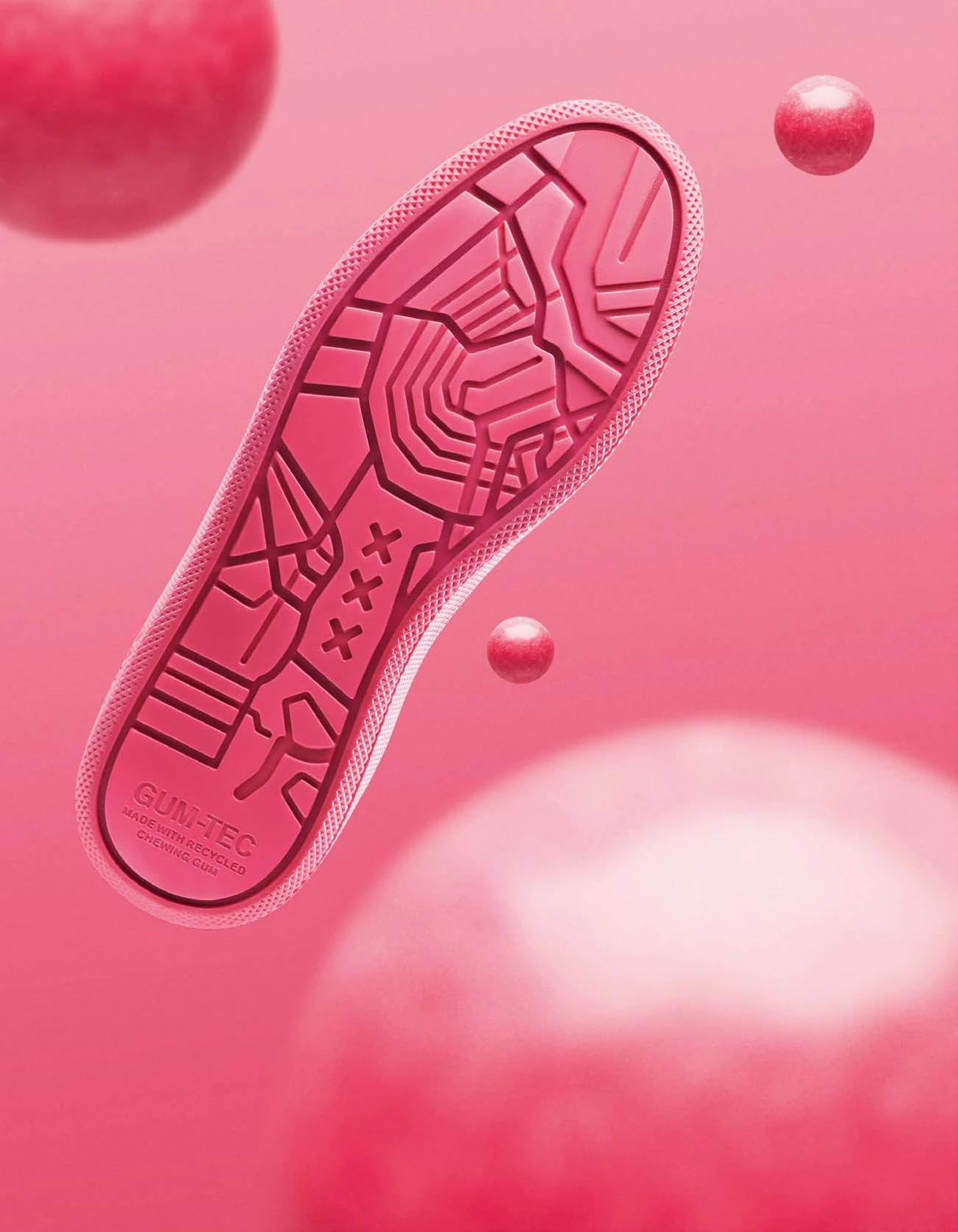
A sneaker in a wider design conversation
GUMSHOE appears in the organiser’s participant notes for Yksi Expo during Dutch Design Week 2018. The Next Way of Living entry places its recycled-gum sole alongside other reuse-based Dutch products. A separate Yksi document, titled Reuse, recycle and upcycle, names Publicis Groupe, XPLCT Studios and Gum Tech in its GUMSHOE entry. These are exhibition records, not current tickets, production certificates or promises of an open display.
Why does that context matter? A familiar object makes an unfamiliar material easier to discuss. You can see a shoe, recognise its underside and ask which part changed. Start with the component rather than assuming that the whole sneaker is made from the same recycled input.
Five questions for a material visit
- Object: identify the exact model, colour and source date. Record whether you are looking at a photograph, sample or finished pair.
- Component: name the upper, outsole, lining or another part. Do not transfer a sole claim to the whole shoe.
- Input: ask what material was collected and which processing route produced the component.
- Evidence: record the document supporting a percentage or performance claim, including its basis and applicable model.
- Next use: identify an accepted repair, reuse or disposal route for the finished pair. An input-recycling story does not establish a return programme.
Use these questions when viewing a collection online, discussing a material sample or preparing a classroom presentation. You do not need to scrape gum from a street or attempt material processing yourself.
A completed observation sheet
- Object
- GUMSHOE, as listed in the Yksi DDW2018 participant document; a written entry, not a pair inspected in person.
- Component
- The entry identifies the sole as the recycled-gum component.
- Evidence available
- Organiser’s PDF, page1; supplier’s description of the GUM-TEC sole and Amsterdam-map design.
- Evidence missing
- A specification for the exact offered batch, a wear test and a current finished-shoe return route.
- Next question
- Which model-specific document accompanies the actual pair, and which care instructions apply?
This is a completed example of source reading, not a new laboratory test. Keep unknown fields marked as unknown instead of filling them with another model’s information.
Make the comparison useful
Use the same five fields for a second sneaker. Compare documented components and missing information rather than ranking products by one recycled percentage. If one entry describes an outsole and another describes an upper, they are answering different questions. For GUMSHOE, continue with the guide to recycled-content claims alongside the after-use questions.
From an image to a learning question
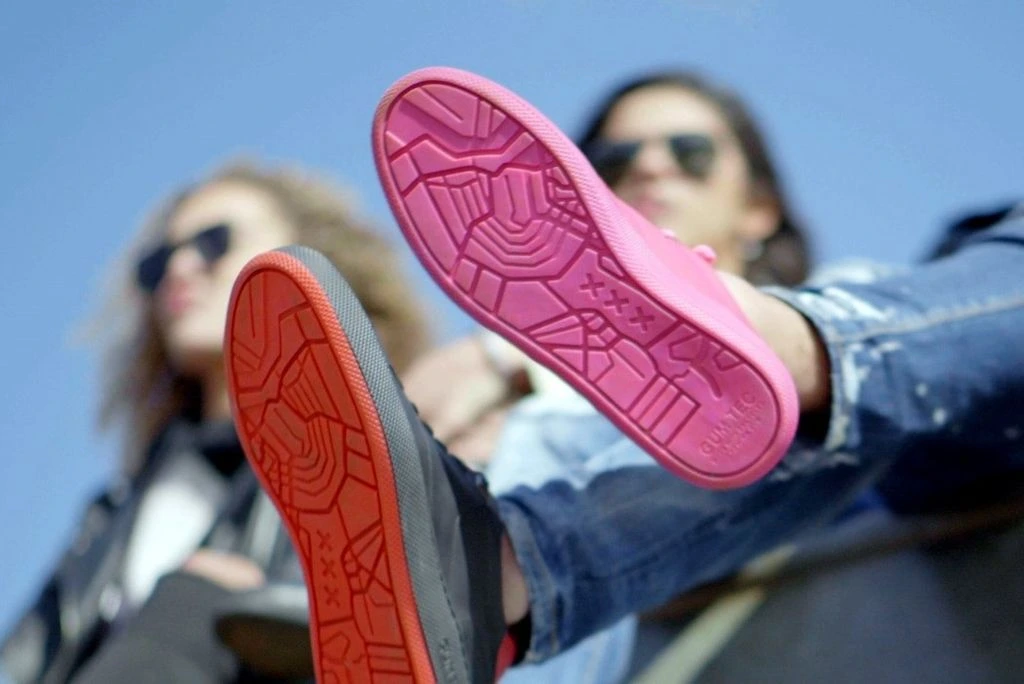
The Solution Not Pollution curriculum uses GUMSHOE as a social and environmental entrepreneurship case. Use the photograph as a starting point for a discussion, then test your explanation with documents rather than adopting every broad claim in the teaching case as a product specification.
- Individually, write one observation about the pictured soles and one question about the material.
- In pairs, find the source that answers the question. Mark questions that remain unanswered.
- As a group, explain the design in three sentences: object, component and supporting evidence.
Example: “Two differently coloured soles are visible. The design concerns the outsole, not an identical material across the whole shoe. The precise composition of an offered pair still requires its own specification.” This is an editorial exercise, not a claim that a classroom trial took place.
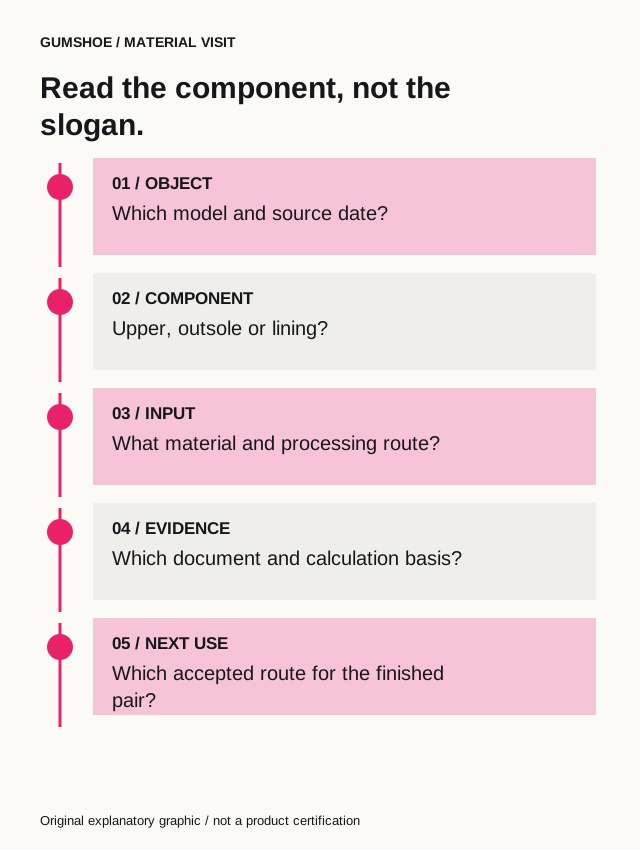
- 01 / OBJECT: Which model and source date?
- 02 / COMPONENT: Upper, outsole or lining?
- 03 / INPUT: What material and processing route?
- 04 / EVIDENCE: Which document and calculation basis?
- 05 / NEXT USE: Which accepted route for the finished pair?
Sources & image credits
Original GUMSHOE photography and project images are used with the owner’s permission. New diagrams are original explanatory work.