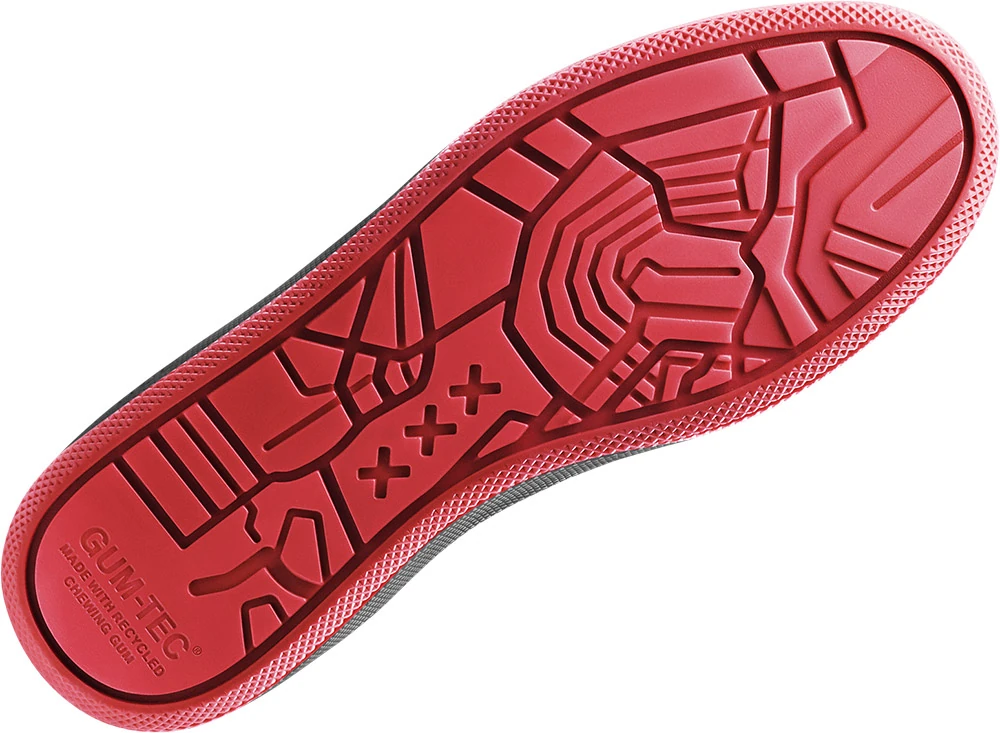
One sentence can contain several claims
“Recycled”, “recyclable”, “made with waste” and “lower impact” answer different questions. A material can contain a recycled input without the finished shoe being accepted by a local recycler. An attractive product photograph cannot settle either question.
Begin by copying the exact claim and identifying what it describes: a component, the whole product or a supplier’s range. Then look for a measurement basis and a document that names the same product.
Use this five-field worksheet
| Field | Example of a useful entry |
|---|---|
| Component | Outsole |
| Claim | Made with recycled chewing gum |
| Basis | Product-specific percentage and method, if supplied |
| Evidence | Named source, date and applicable model |
| Next question | What accepts the complete shoe at end of use? |
A GUMSHOE example
The original campaign and Gumdrop’s collaboration account establish the recycled-gum sole. They do not provide a complete current bill of materials, shoe-level impact assessment or a universal disposal instruction. Keep those items separate instead of using an old media estimate to fill the gaps.
Some published stories describe the entire shoe as chewing gum. The recovered photographs and the manufacturer’s explanation support a more precise reading: Gum-tec is used in the sole of a multi-component sneaker.
Compare like with like
- Write each product’s claim in its original scope.
- Compare percentages only when their component and basis match.
- Check whether the evidence names the model or only a material supplier.
- Separate production claims from practical care and disposal.
- Choose what matters to your use: fit, construction, condition, traceability and a clear seller response.
Why the published percentages differ
The SAN 2018 case record states 80% for the sole. WWD’s report dated 20 June 2019 states 40% in its description of the shoe presented by Xplct. These are different dated accounts; neither supplies a matching batch-level specification in the recovered material.
Do not average the numbers or select the larger one. Record each claim with its component, source and date, then ask which documented specification applies to the pair. A changing design, a different measurement basis or an error could explain a discrepancy, but the available records do not settle which explanation is correct.
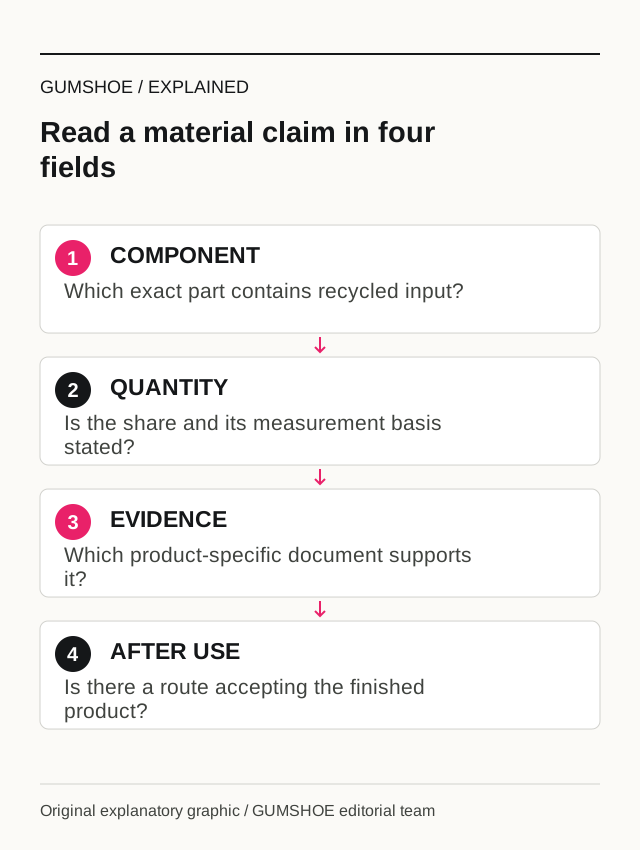
- COMPONENT: Which exact part contains recycled input?
- QUANTITY: Is the share and its measurement basis stated?
- EVIDENCE: Which product-specific document supports it?
- AFTER USE: Is there a route accepting the finished product?
Sources & image credits
Original GUMSHOE photography and project images are used with the owner’s permission. New diagrams are original explanatory work.