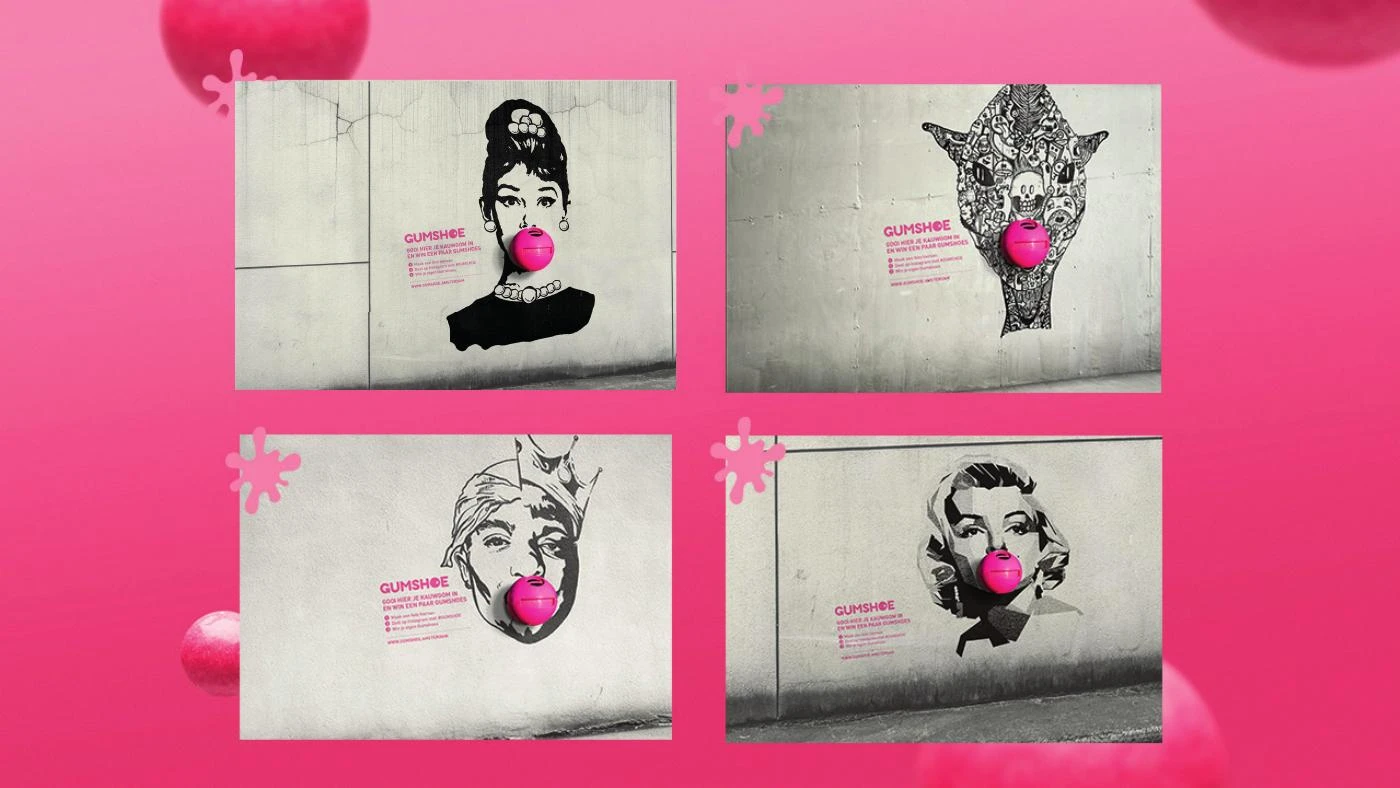
The campaign sequence
The original presentation opens with the designers and a question about gum on the streets. It then introduces the material, the collaborating organisations and the footwear. The closing slides return to public awareness, showing gum collection and illustrated faces blowing gum.
The sequence works because it connects a visible city problem with a tangible object. The shoe is the way into the story, and the material process gives people a reason to look more closely.
What the deck actually records
| Slides | Content |
|---|---|
| 1–3 | Project title, design team and central idea |
| 4–8 | Origin of the challenge, Gum-tec and collaboration |
| 9–12 | Design intent and pink / black sneaker views |
| 13–15 | Promotion and publicity claims in the original deck |
| 16–20 | The street question, collection visuals, campaign imagery and close |
Keep a campaign claim in its context
Slide 6 contains figures about gum waste, breakdown time and costs; slides 14–15 describe publicity. These are campaign statements in a period presentation. They are not fresh measurements, independently verified lifetime performance or current reach statistics for this website.
The most useful information to carry forward is the structure: identify a problem, show a material application, name the contributors and let readers inspect the actual object.
A useful communication checklist
- Name the product component that uses the material.
- Show the real product and the material path separately.
- Credit the people and organisations involved.
- Attach a date and source to numerical claims.
- Give readers a next step that matches what is currently available.
Explore the detailed records
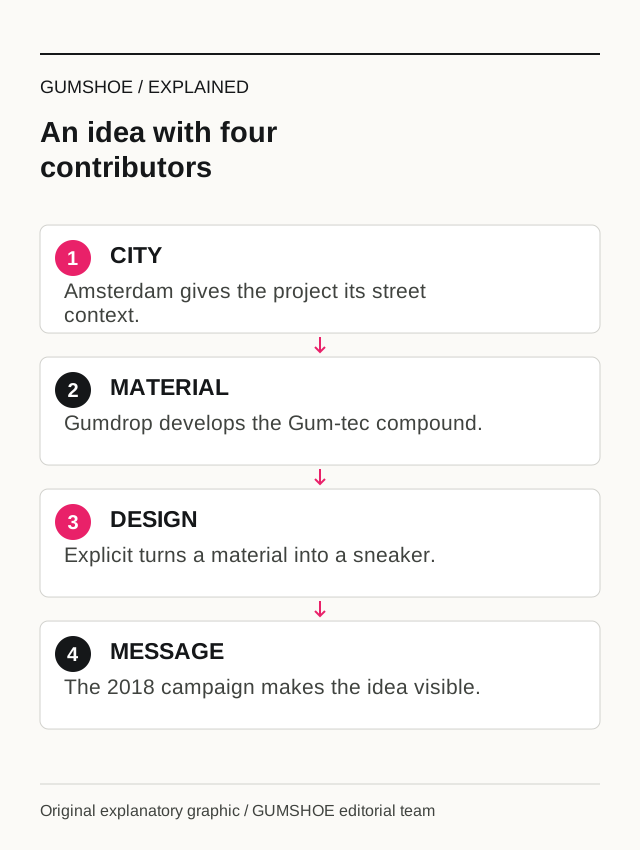
- CITY: Amsterdam gives the project its street context.
- MATERIAL: Gumdrop develops the Gum-tec compound.
- DESIGN: Explicit turns a material into a sneaker.
- MESSAGE: The 2018 campaign makes the idea visible.
Sources & image credits
Original GUMSHOE photography and project images are used with the owner’s permission. New diagrams are original explanatory work.